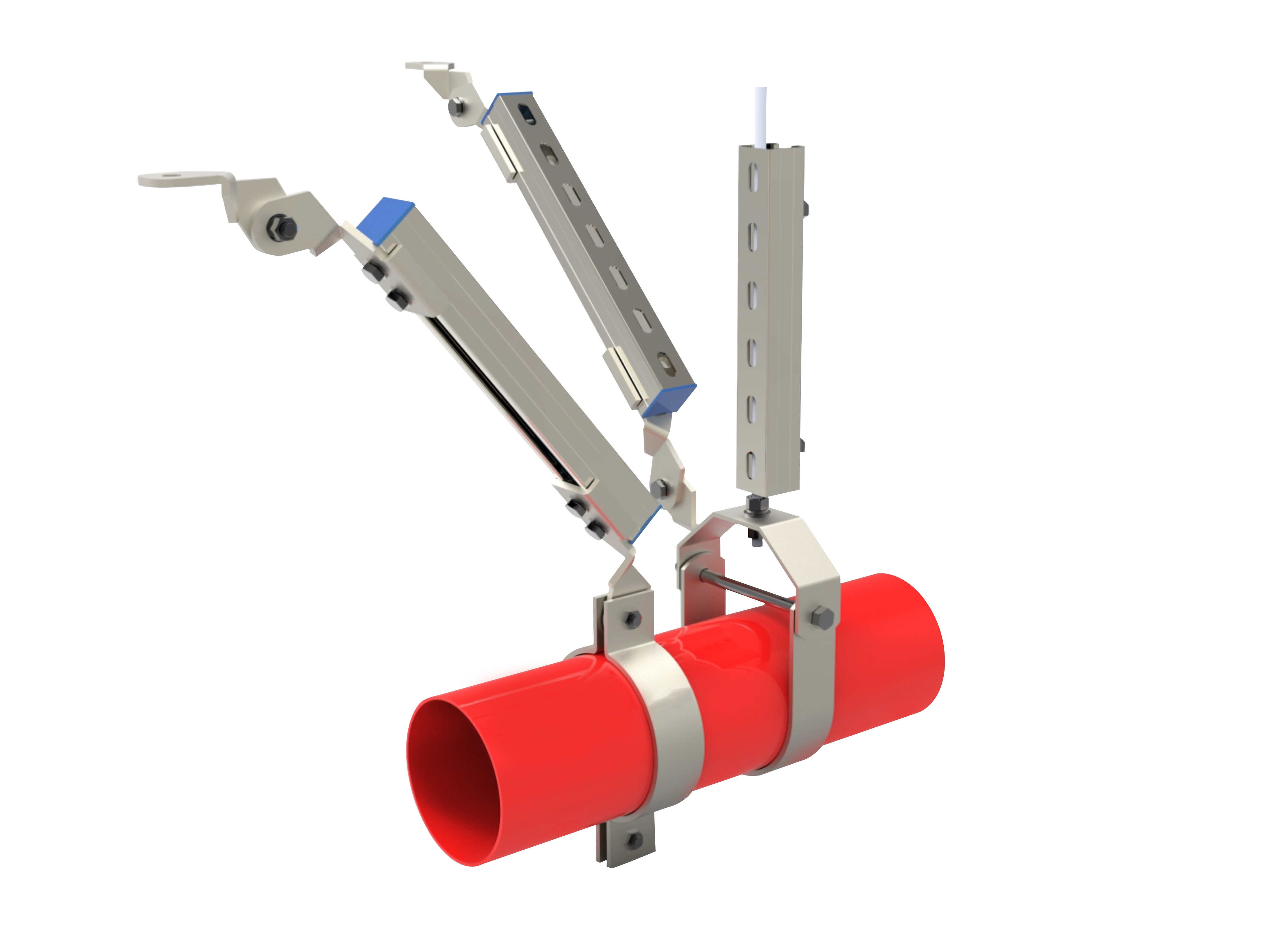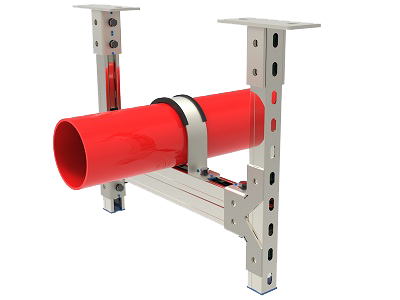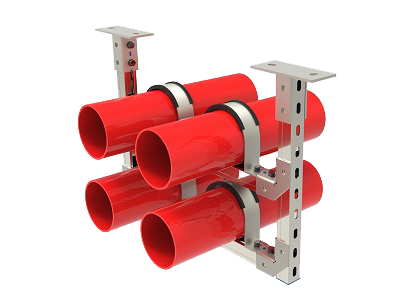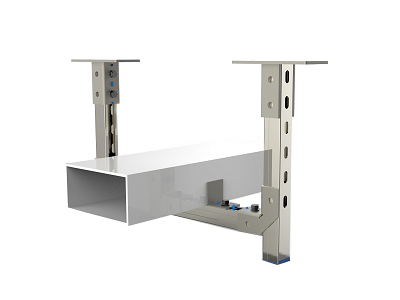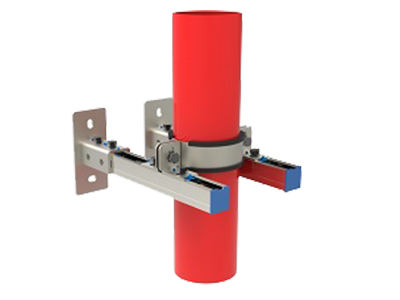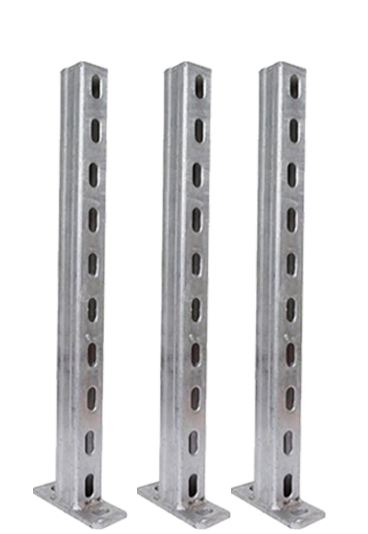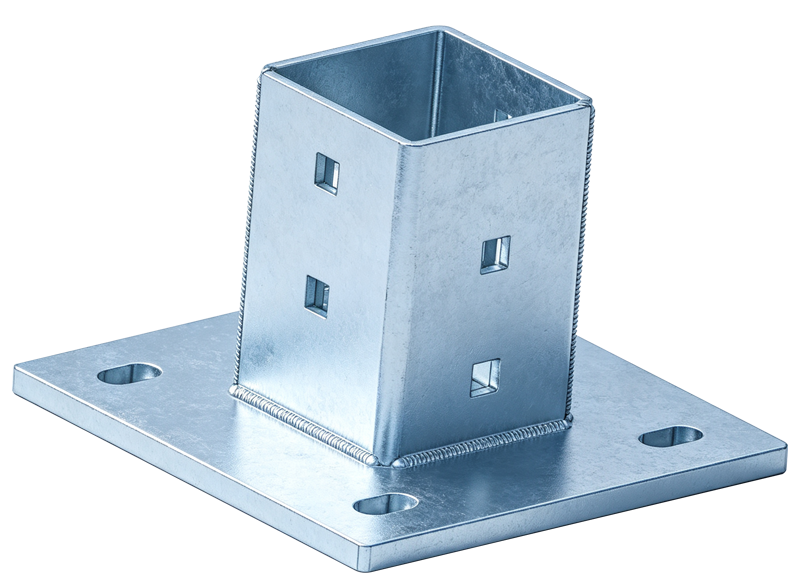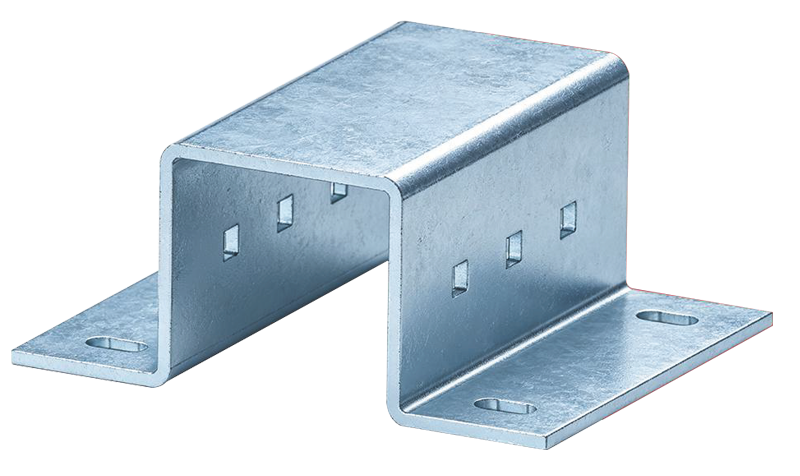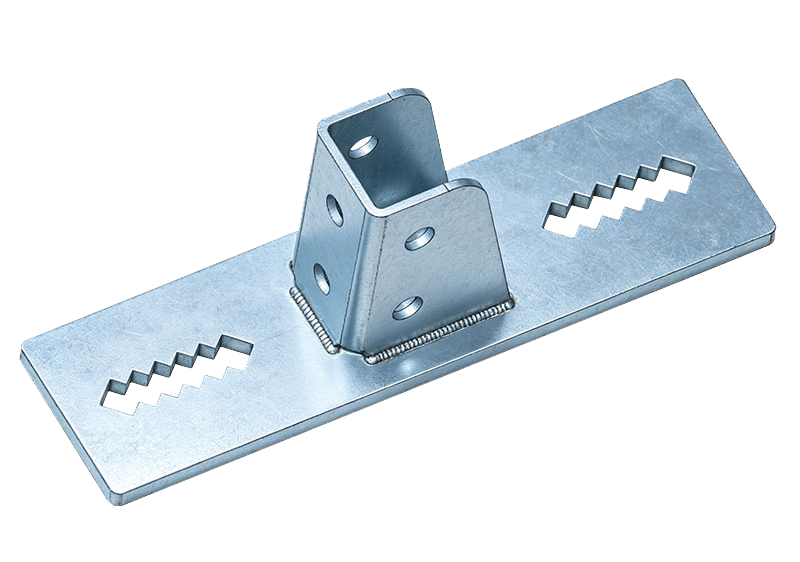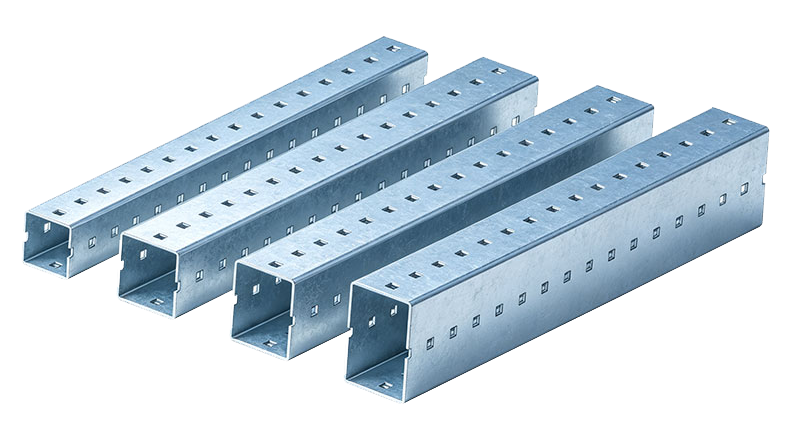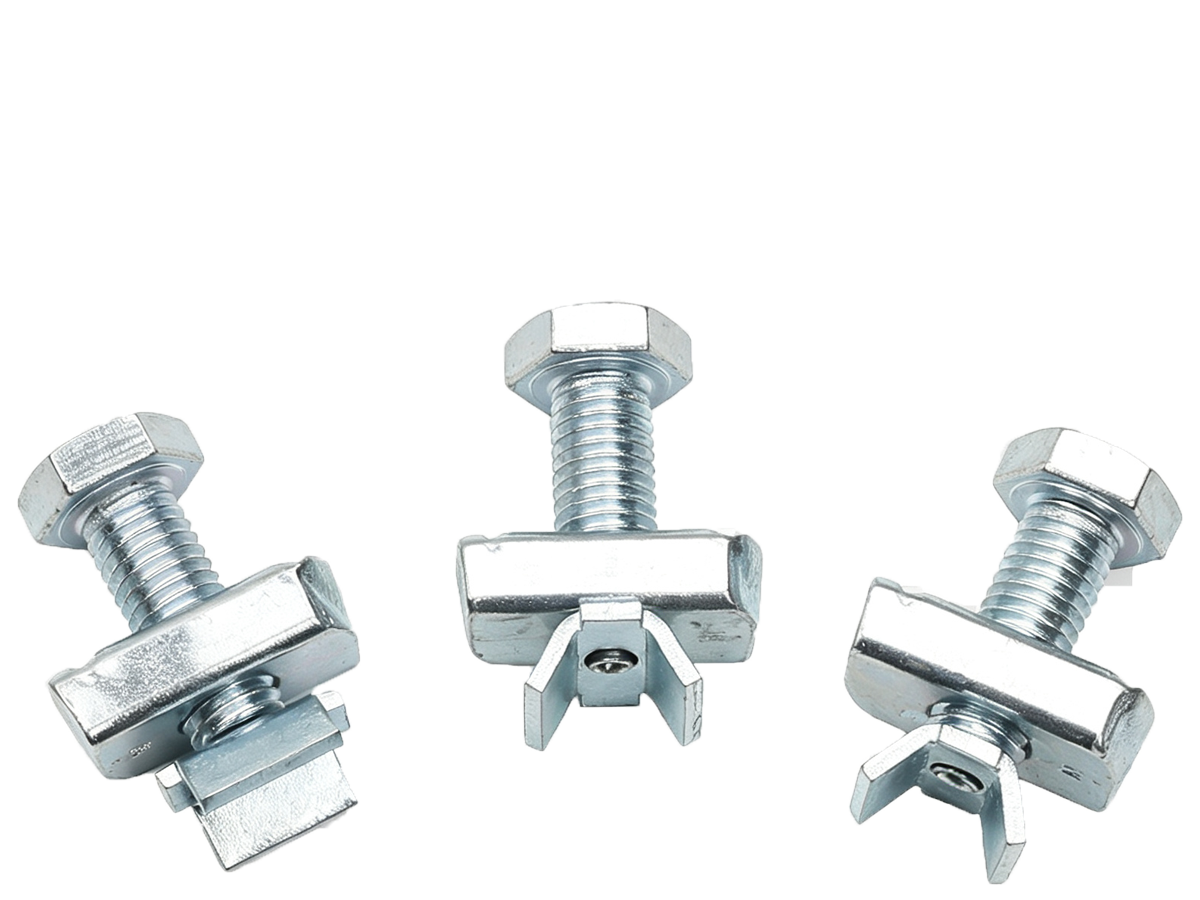

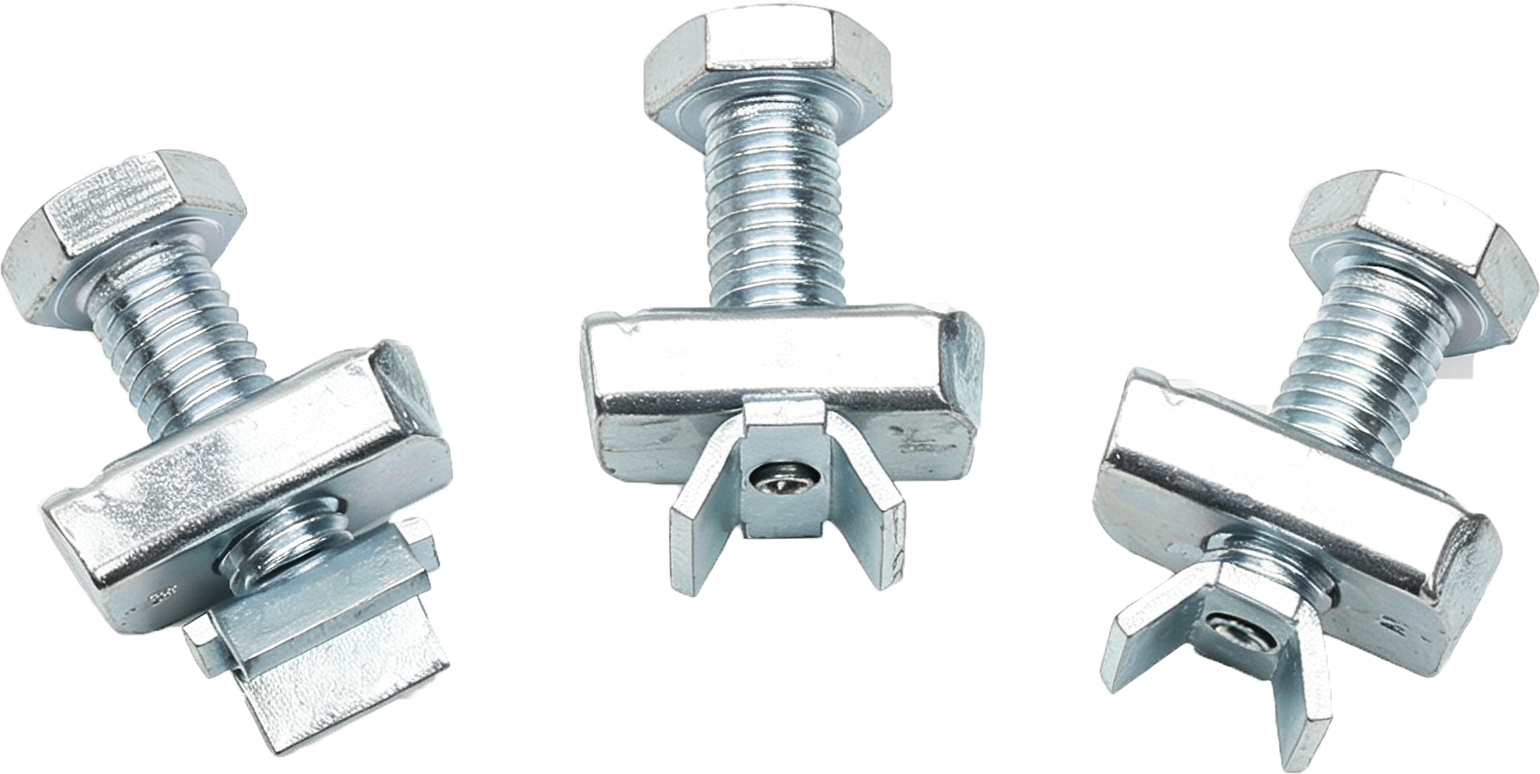
The V-type stiffener, also referred to in the industry as threaded rod stiffener or hanger anti-buckling stiffener, is a special fitting for seismic gate-type hangers. It serves to reinforce the connection between vertical load-bearing hangers (full-threaded rods) and C-channel cross members, eliminating instability and buckling issues of long hangers under compression. It is classified as a hanger reinforcing component.
① Prevent threaded rod buckling under compression
During an earthquake, hangers of gate-type supports will bear compressive loads; slender threaded rods are prone to buckling and bending. The V-type stiffener rigidly locks the threaded rod to the C-channel cross member, shortening the effective length of the hanger and reducing its slenderness ratio.
According to GB 50981-2014: Reinforcement measures shall be provided when the slenderness ratio of hangers exceeds 100. The V-type stiffener is a commonly adopted solution.
② Restrict lateral sway of hangers
It restricts lateral movement of threaded rods and prevents slippage and torsion between the threaded rod and channel.
③ Transfer horizontal seismic force
It enables effective transfer of horizontal seismic loads to seismic diagonal bracing, ensuring coordinated force bearing of the entire gate-type seismic support system.
3. Standard Installation Positions (Gate-type Seismic Supports)
Install at the junction of vertical threaded rods and C-channel cross members of gate-type supports;
Mandatory installation where the free length of hangers is relatively long (generally over 500 mm) and the slenderness ratio exceeds the limit;
One set of V-type stiffener shall be arranged on each side of a single threaded rod in symmetrical layout;
Concept Distinction (Frequently Confused Components)
✅ V-type stiffener: Reinforces vertical threaded hangers to prevent buckling;
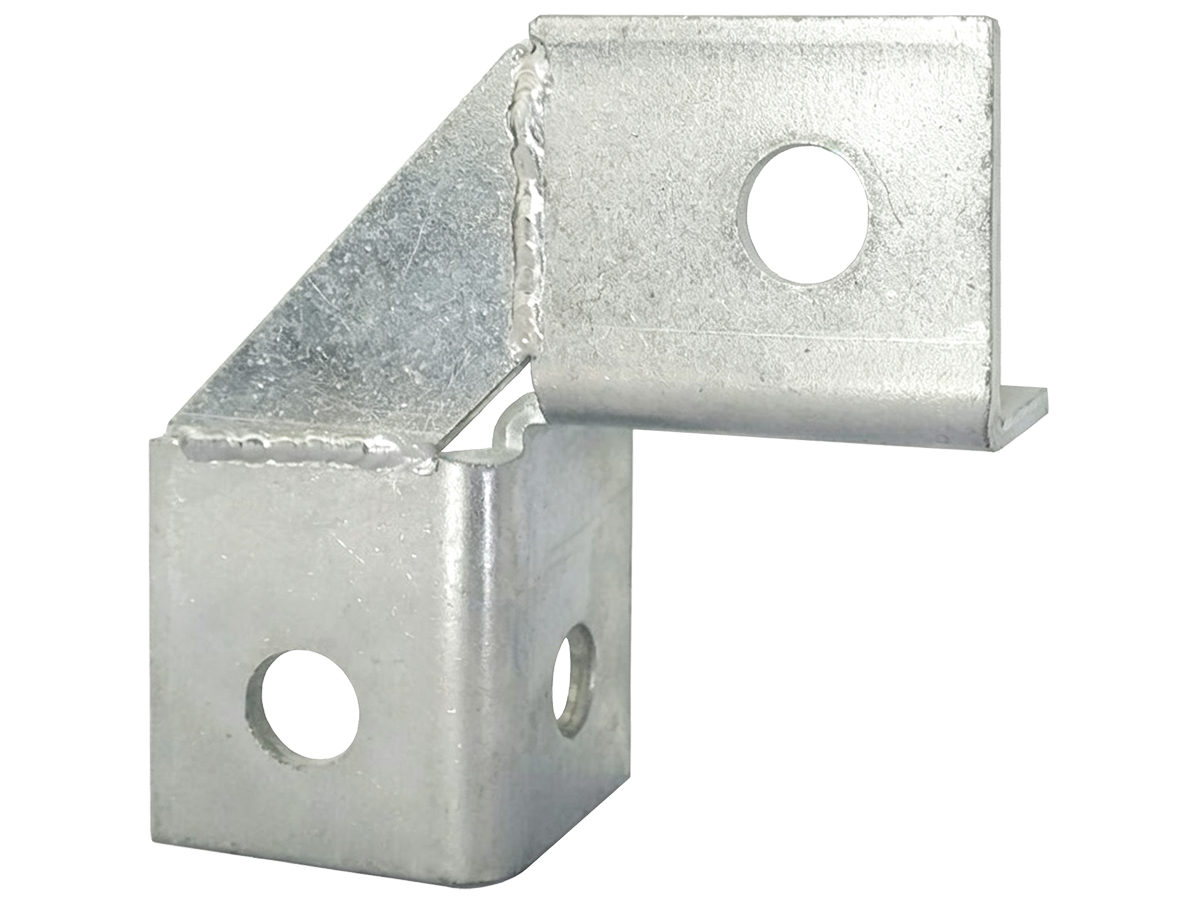
✅ 90° angle connector (L-bracket): Rigid right-angle connection between C-channels;
✅ Seismic hinge connector: Articulated fitting at both ends of diagonal bracing, allowing slight rotation;
❌ The three components are not interchangeable.
GB 50981-2014 Code for Seismic Design of Building Mechanical and Electrical Engineering, Clause 8.3.8
Reinforcement measures shall be adopted when the slenderness ratio of hangers exceeds 100 and the slenderness ratio of diagonal bracing members exceeds 200.GB/T 37267-2018 General Technical Specifications for Seismic Supports and Hangers of Building Mechanical and Electrical Equipment
During installation, channel spring nuts must engage with the serrated curled edge of C-channel; direct compression on smooth surfaces is prohibited;
Tighten bolts in accordance with manufacturer-specified torque to avoid loosening under seismic conditions;
Hot-dip galvanized products are preferred for humid underground parking garages;
Misconception: Installation of V-type stiffener does not eliminate the requirement for seismic diagonal bracing. The V-type stiffener only reinforces hangers; lateral /longitudinal seismic diagonal bracing is still required to resist horizontal seismic forces;
For light short hangers (length < 300 mm with acceptable slenderness ratio), installation may be omitted if not specified on drawings.
C-channel cross member + vertical threaded rod + V-type stiffener + pipe clamp + seismic hinge connector + seismic diagonal bracing + base + 90° angle connector (for column splicing if required)
Consists of two V-shaped bent steel plates, matched bolts and channel spring nuts (channel lock nuts). The assembly clamps the vertical threaded rod, with two wings fixed inside the C-channel.
M10, M12, M14, M16 (M12 and M14 are most widely used in engineering projects)
Standard C-channel: 41×21, 41×41
Base material: Q235B cold rolled steel plate
Surface treatment: Electro-galvanized (indoor use); Hot-dip galvanized / Zinc-chromium coating (humid underground garage)
Standard plate thickness: 4mm; 5mm thickened version for heavy load applications

Hi! Welcome back.
How are you doing?