


1. Applicable Pipe Specifications
- Nominal diameter: DN65 ~ DN150
- Corresponding outer diameter range: Approx. 76mm ~ 168mm (varies slightly based on pipe material standards).
2. Seismic Design Standards
- Complies with the *Code for Seismic Design of Buildings* (GB 50011) and the *Code for Seismic Design of Mechanical and Electrical Engineering in Buildings* (GB 50981).
- Seismic fortification intensity: Suitable for regions with intensities of 6–9; design seismic acceleration can be adjusted as required.
3. Materials and Corrosion Protection
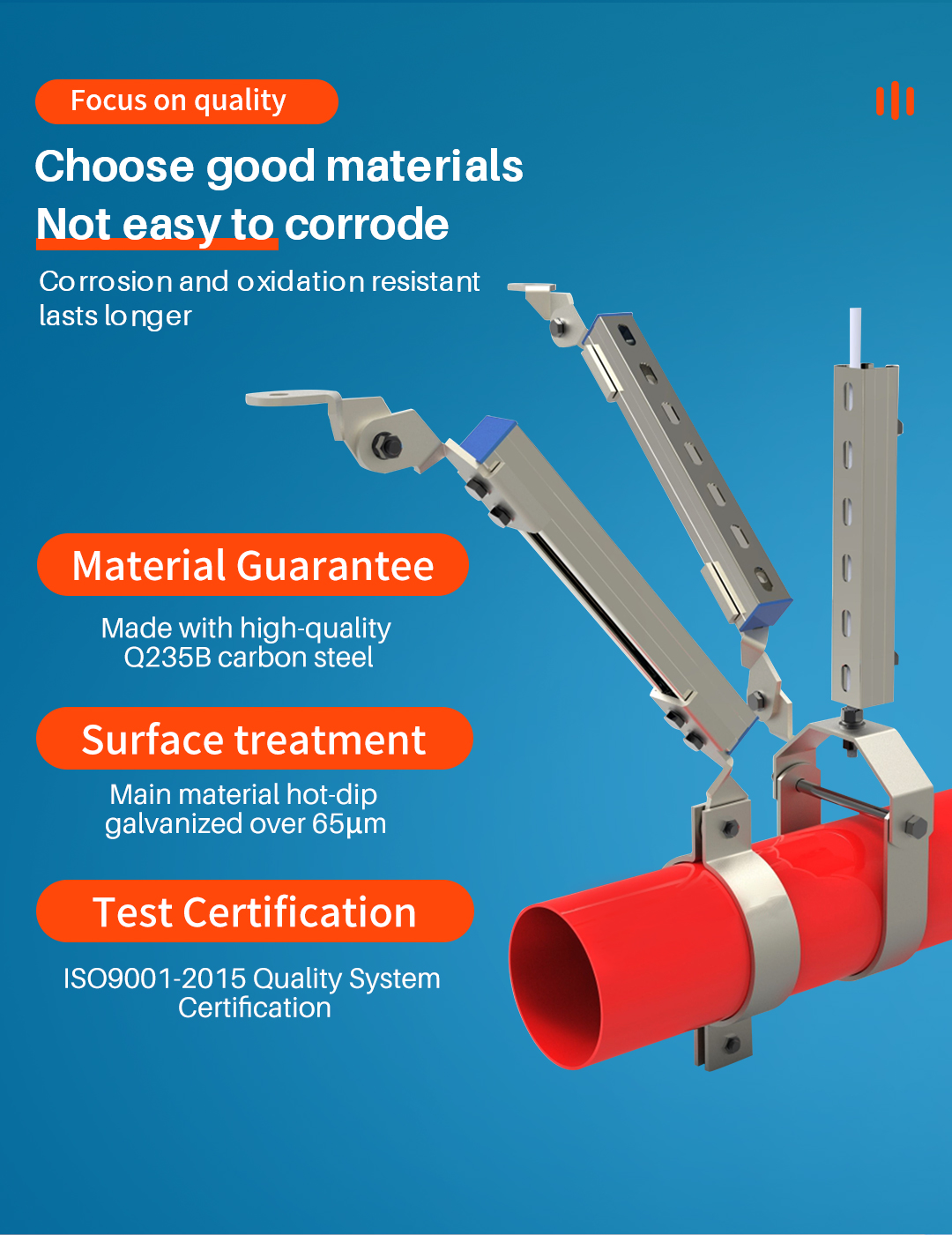
- Main structural components: Q235B (or higher grade) carbon steel or high-strength aluminum alloy.
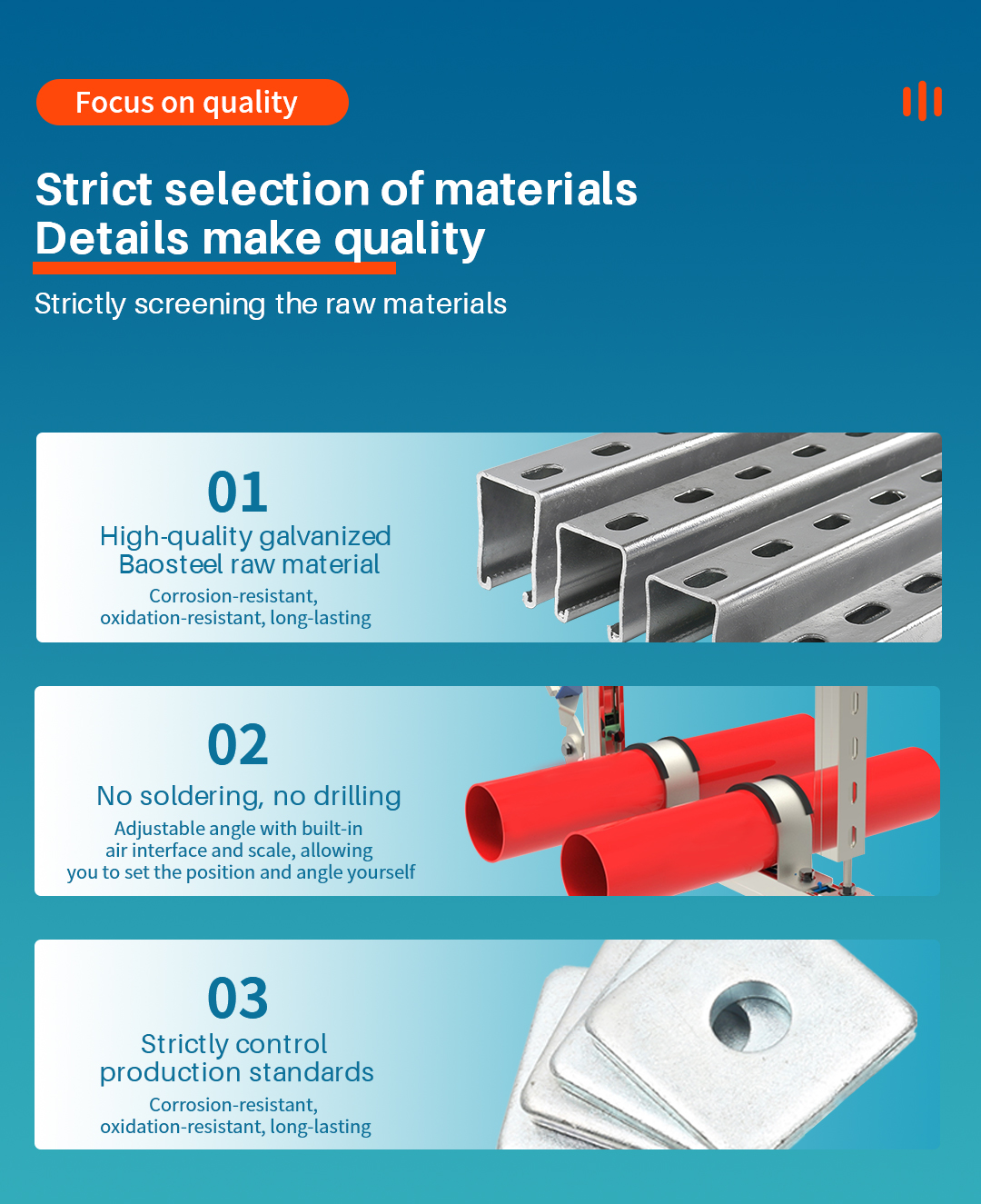
- Surface treatment: Hot-dip galvanizing (average thickness ≥ 55μm) or epoxy coating to meet corrosion resistance requirements.
- Connectors: Seismic hinges and threaded rods (fully threaded); strength grade no lower than 5.6.
4. Mechanical Properties
- Design load for lateral seismic bracing: ≥ 2.0 kN (adjustable based on project calculations).
- Design load for longitudinal seismic bracing: ≥ 1.5 kN (adjustable based on project calculations).
- Static load safety factor for components ≥ 1.5; dynamic load safety factor for seismic connectors ≥ 1.2.
5. Structural Features
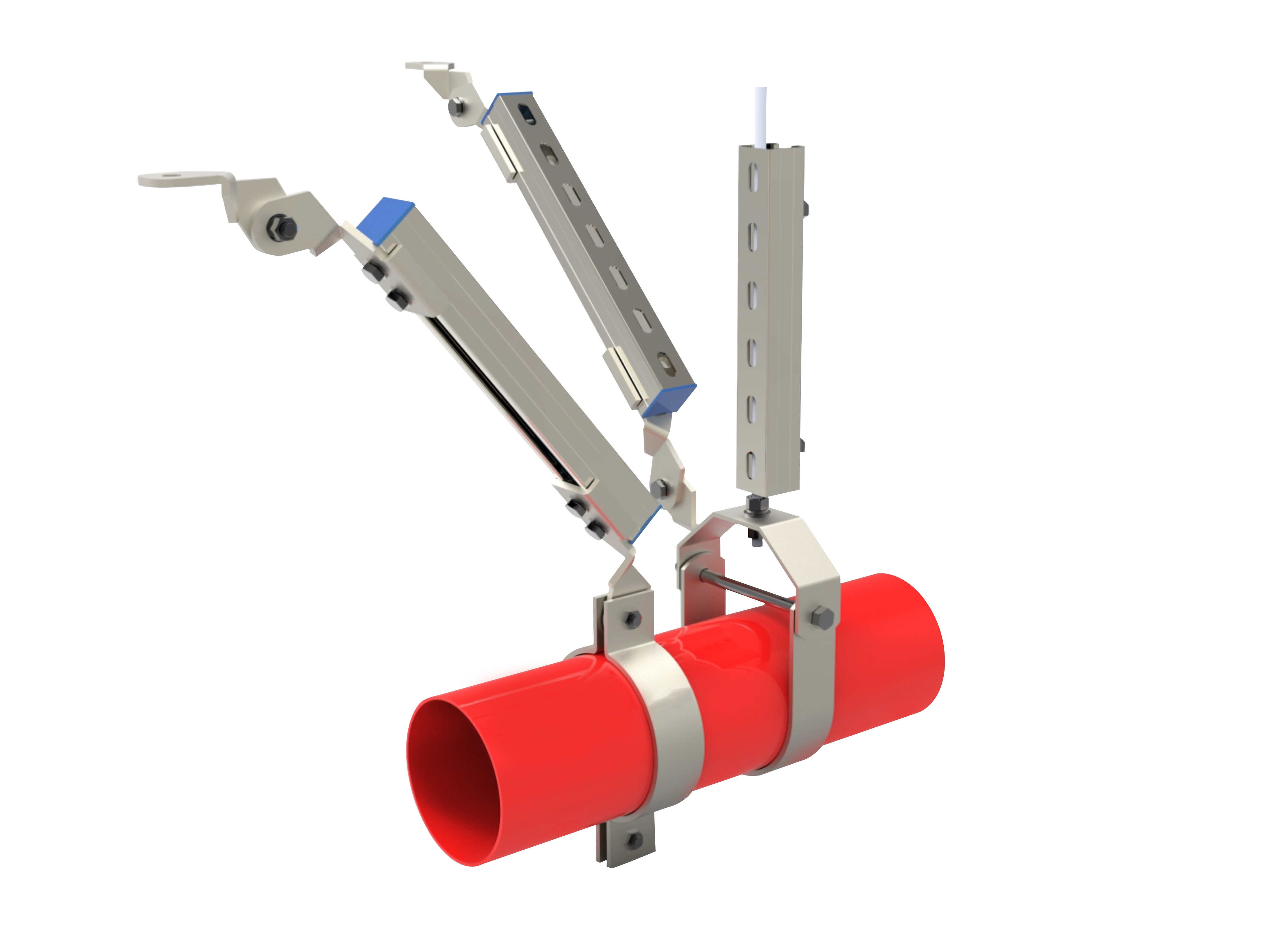
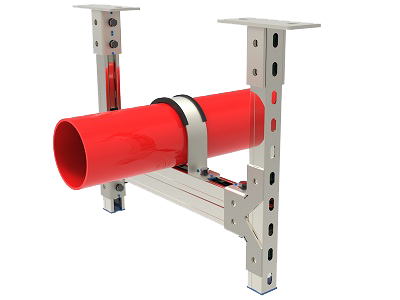
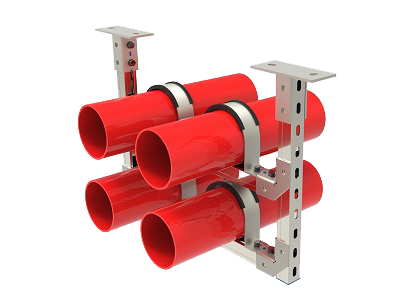
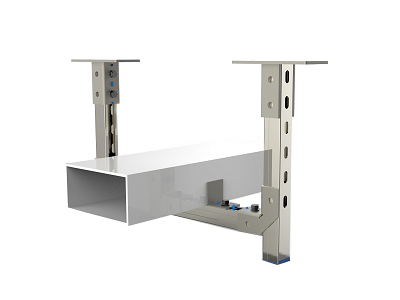
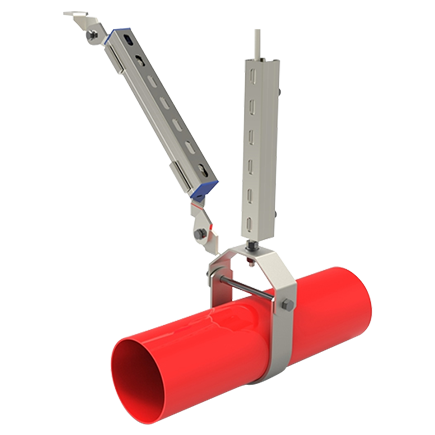
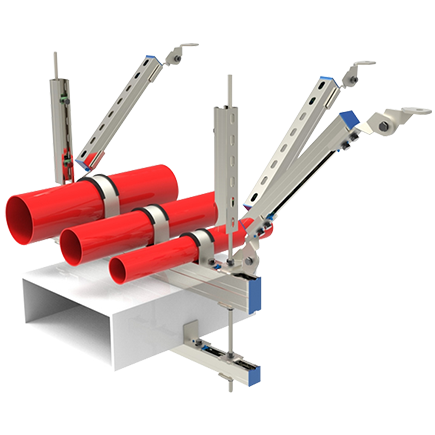
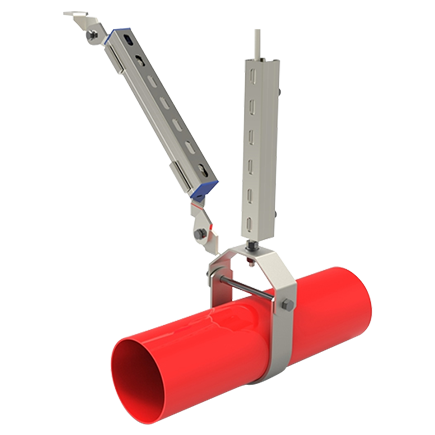
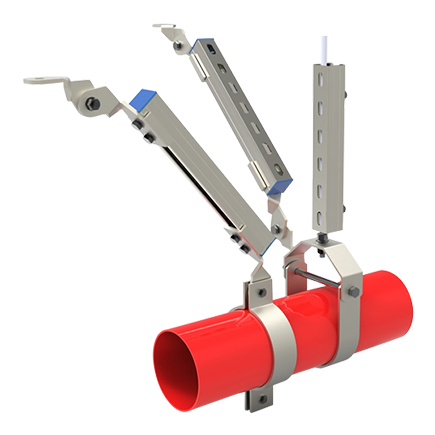
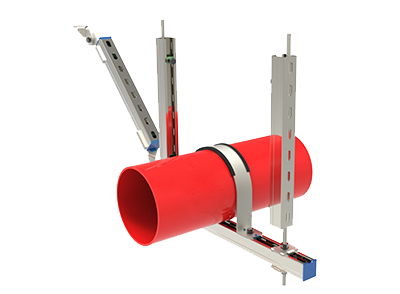
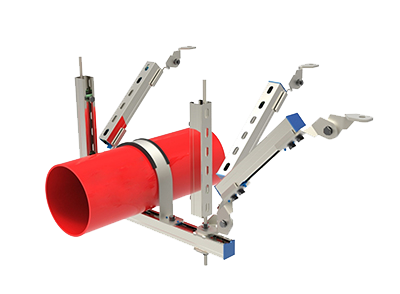
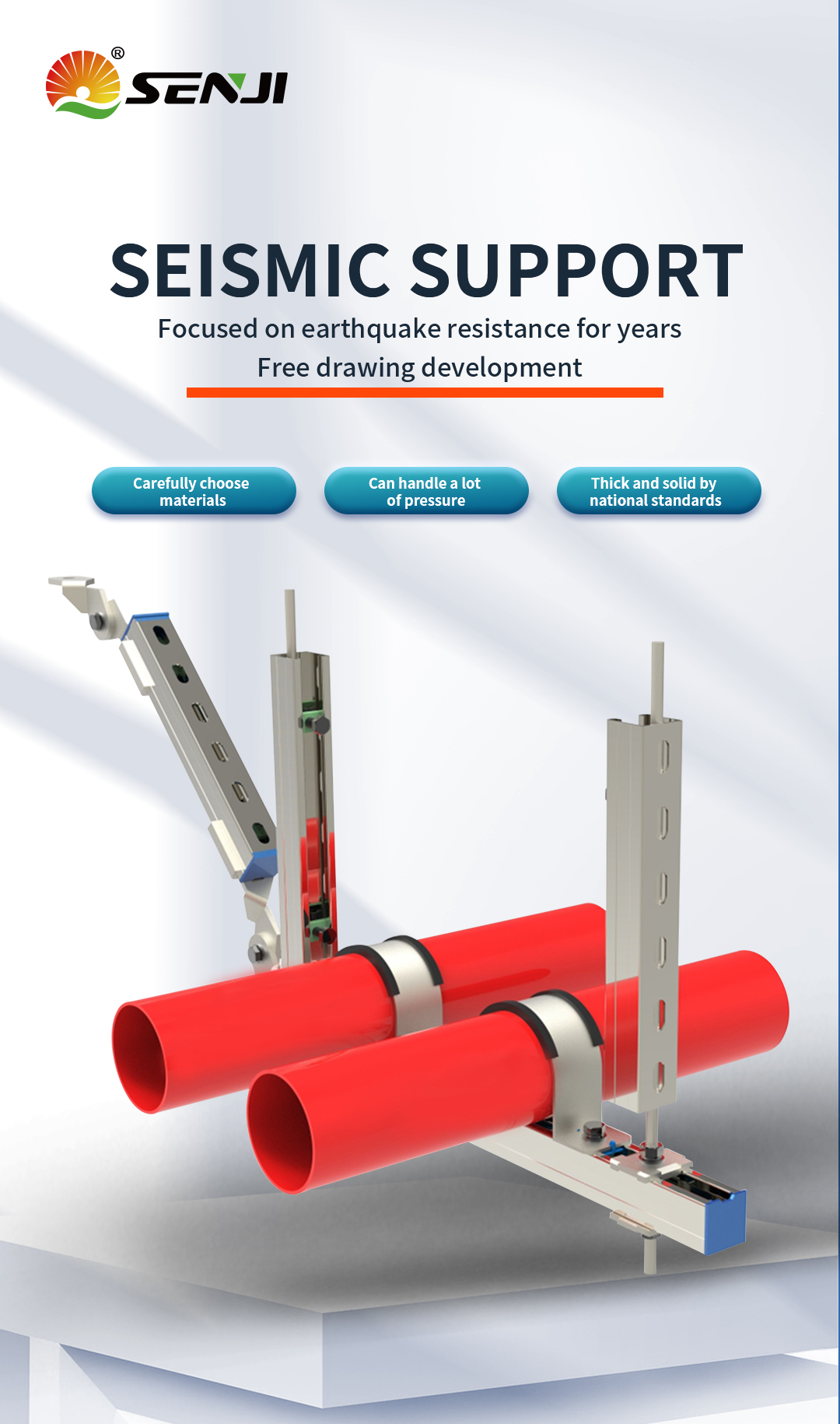
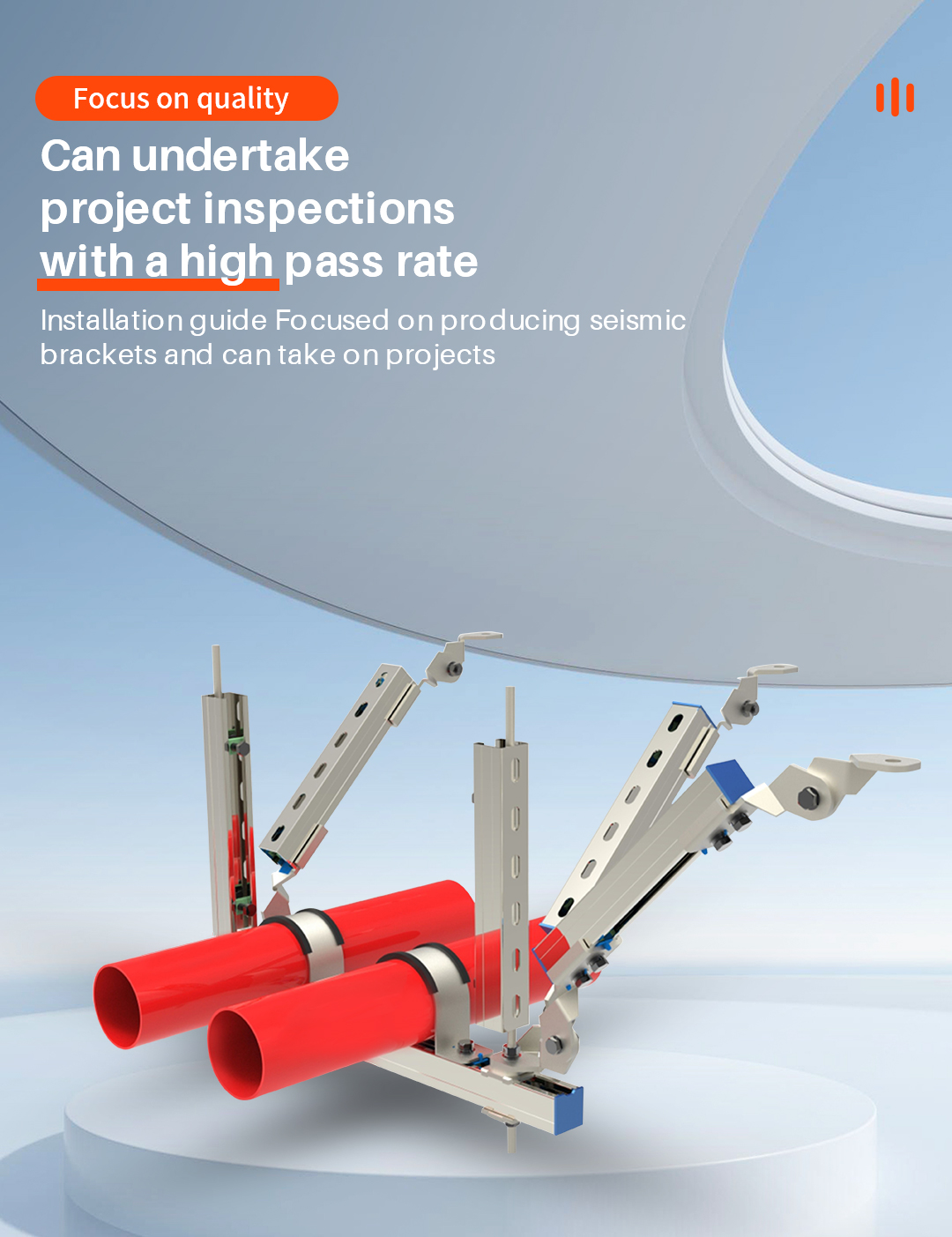
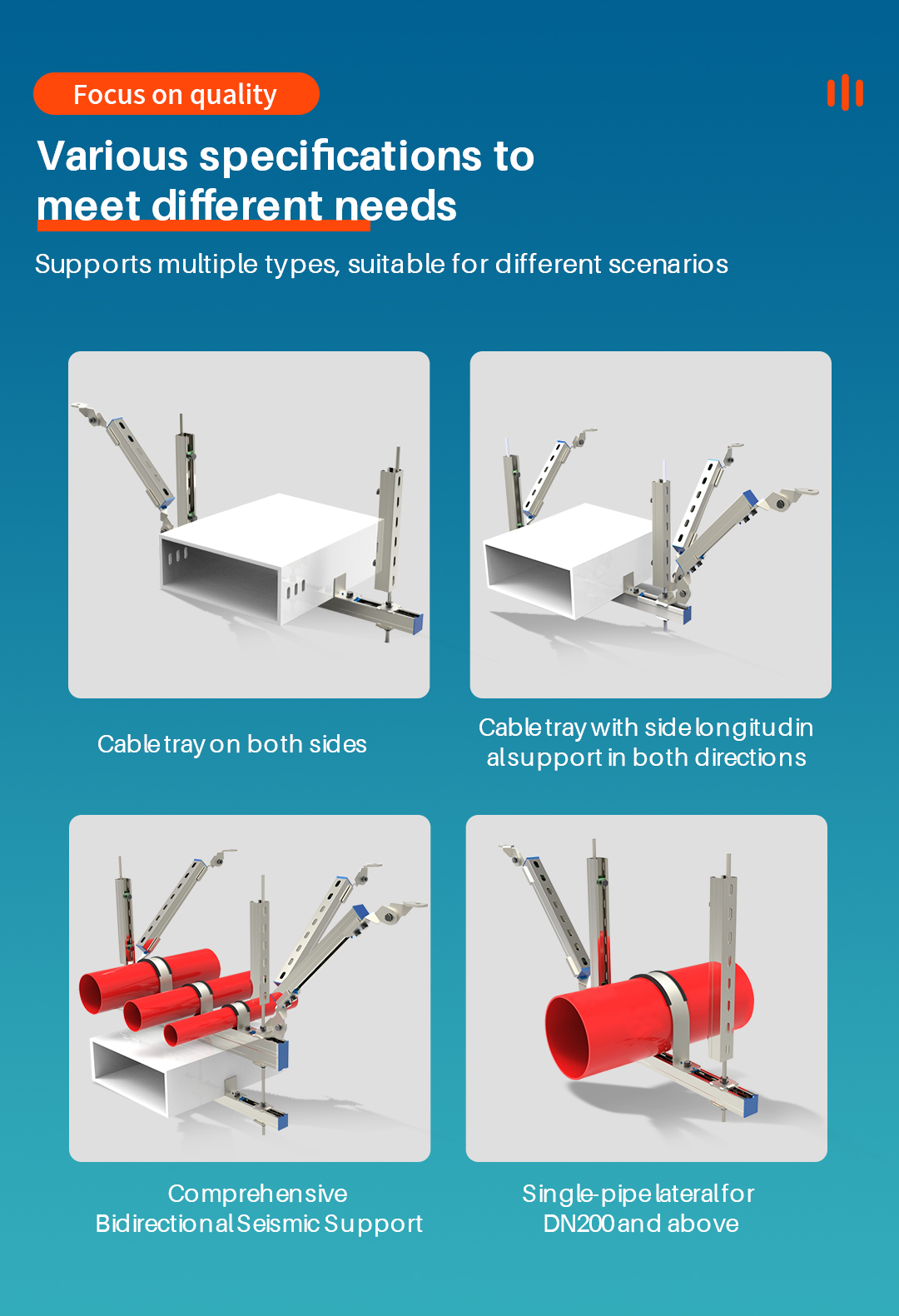
- Bi-directional seismic structure: Utilizes a combination of lateral and longitudinal diagonal braces to form a spatially stable system.
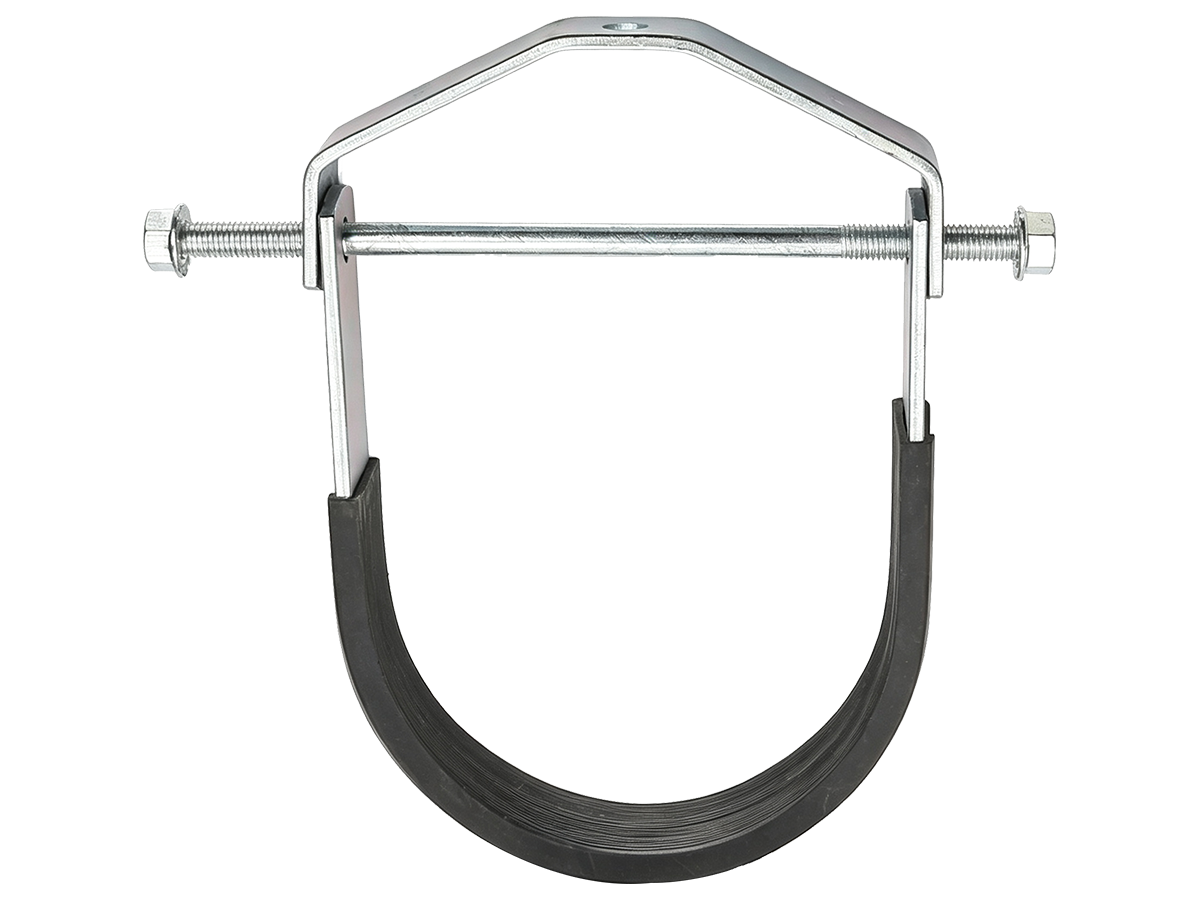
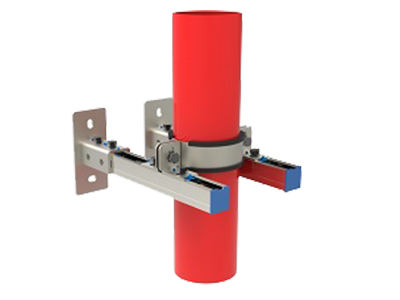
- Pipe clamp design: Heavy-duty clamp with seismic cushioning pads; accommodates thermal pipe displacement while preventing slippage and dampening vibration.
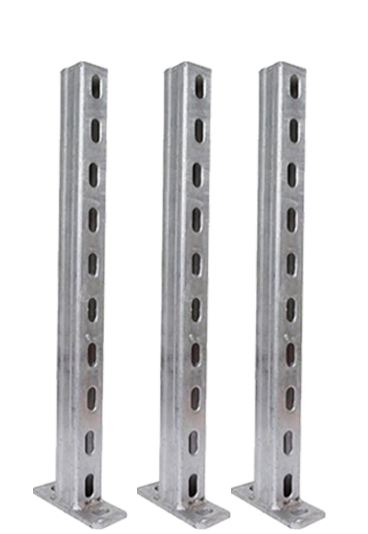
- Connection method: C-channel or threaded rod combination system; adjustable installation allowing for on-site fine-tuning.
6. Installation and Compatibility
- Suitable for steel pipes, metal composite pipes, and certain reinforced plastic pipes.
- All connection joints must be rigidly fastened; recommended diagonal brace angle is between 30° and 45°.
- Anchors must be specifically selected based on the strength of the base concrete or steel structure.

Hi! Welcome back.
How are you doing?