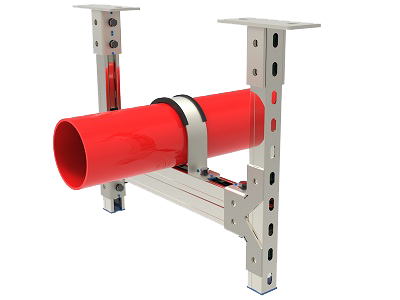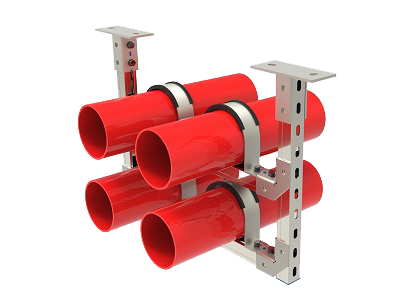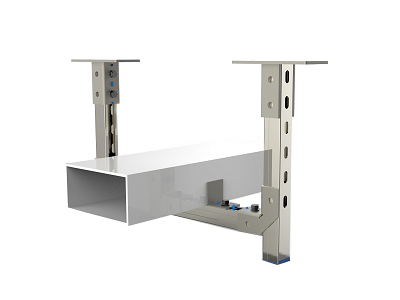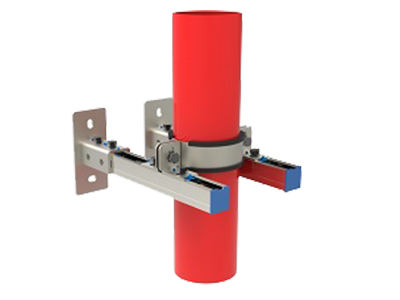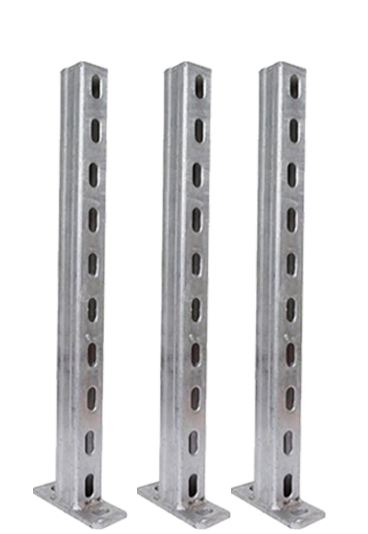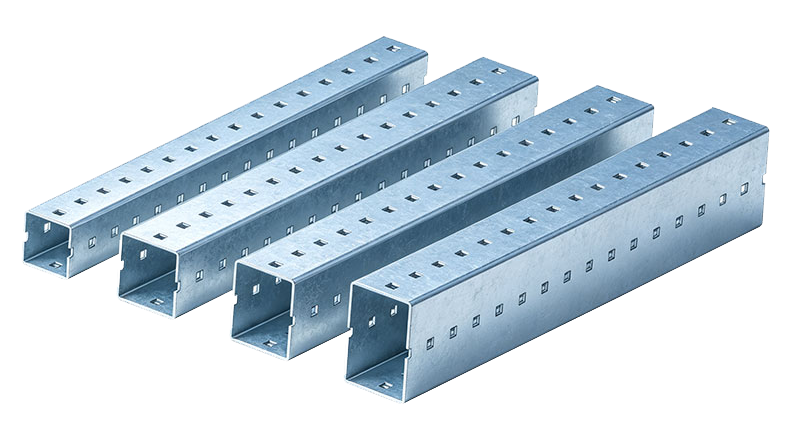

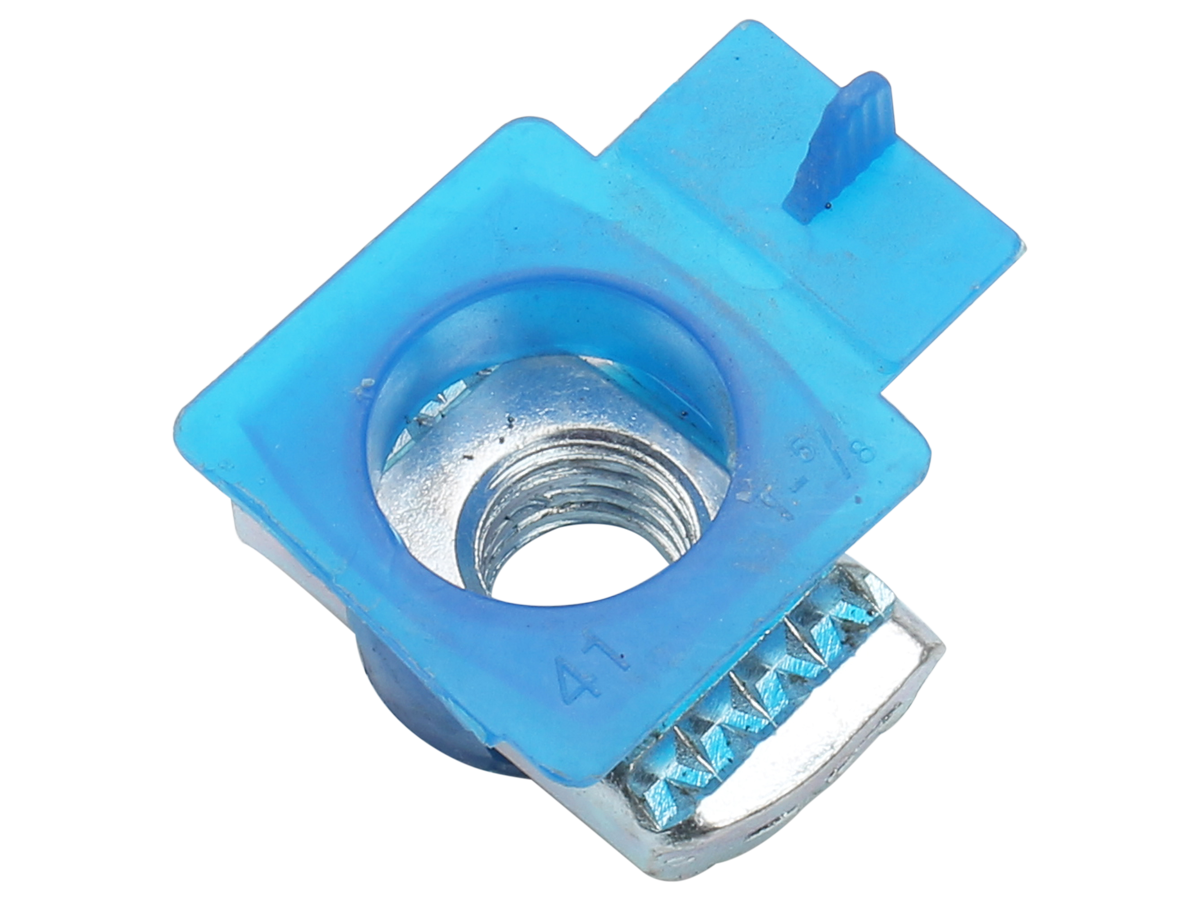
Compatible with 41-series seismic C-channel steel (41×41, 41×62, 41×82). Fitted with integrated spring clips, it can be inserted freely into any position inside the channel slot for sliding positioning, without pre-welding or pre-drilling.
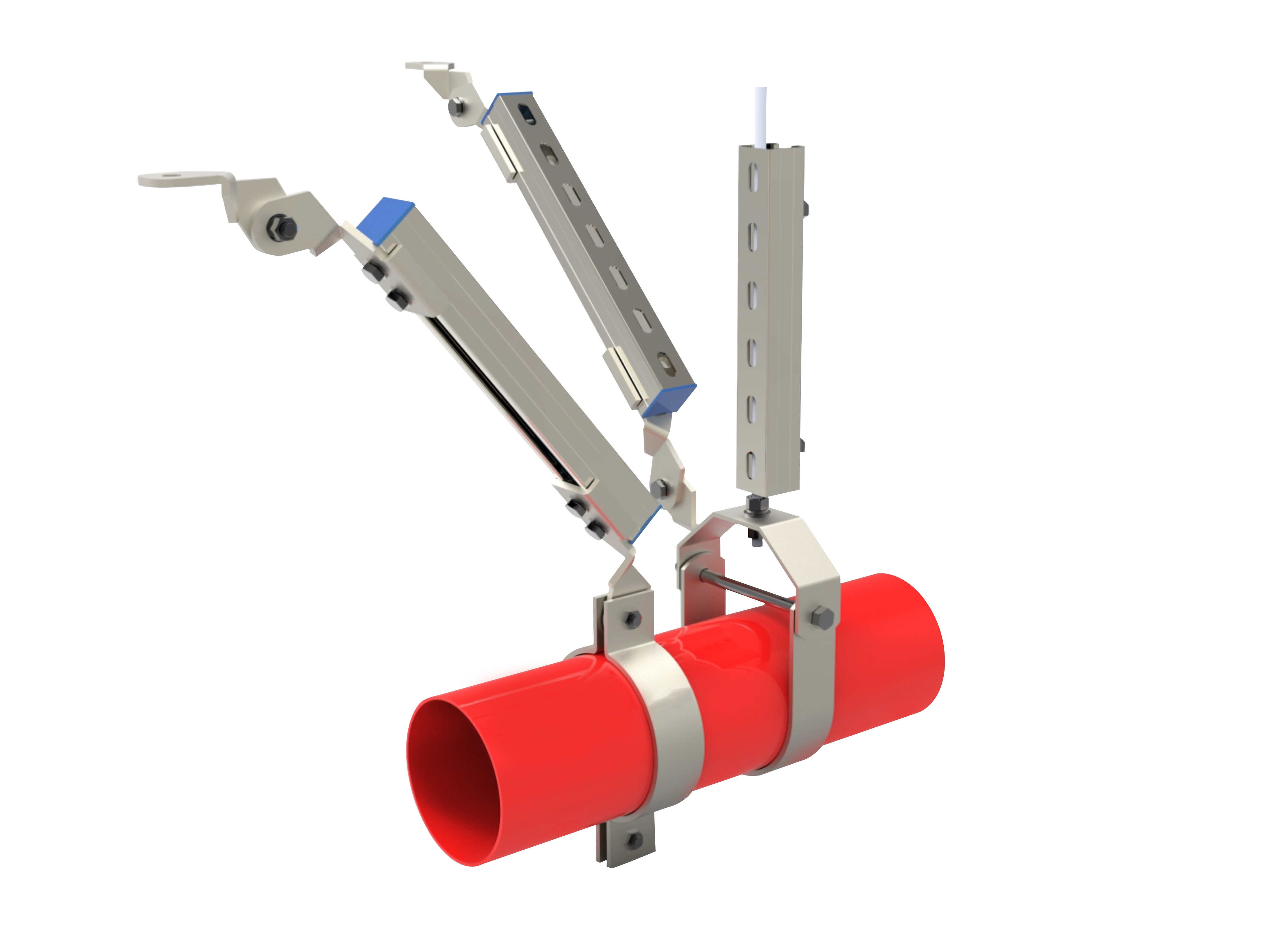
Application: Connect seismic hinges, diagonal braces, pipe clamps, connectors and cross arms
Sizes: M8, M10, M12 (M10 & M12 are mainstream for seismic projects)
Material: Q235 carbon steel; surface finishes: electro-galvanized, hot-dip galvanized, Dacromet
Available in nylon insert lock nuts and all-metal lock nuts. Used together with suspender rods and channel clamp plates to bear vertical loads. Anti-loosening performance is mandatory per seismic codes.
Matching scenario: Secure cross arms by running suspender rods through channel steel and channel clamp plates, locked from top and bottom
Sizes: M10, M12
Advantages: Resists loosening under reciprocating seismic vibration, compliant with GB 50981 seismic standard
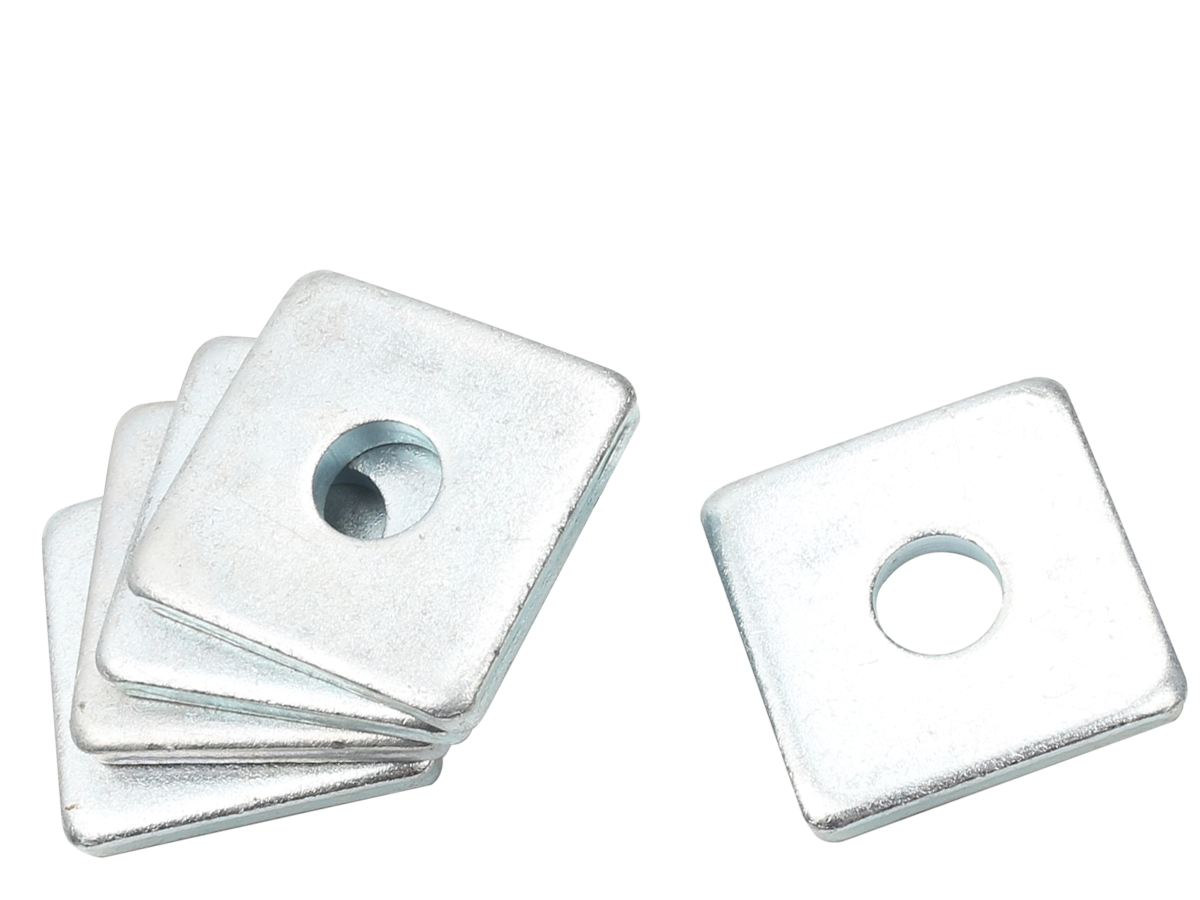
Only used together with flat washers. Not allowed for standalone use at force-bearing seismic joints, and single use is not accepted in project inspection.
Structure: Hex nut plus stainless steel elastic retaining clip
Operation: Insert into the channel slot from the end of C-channel steel; slide freely to the required position. The spring clip clamps tightly after release to prevent falling off, then fasten fittings with bolts directly.
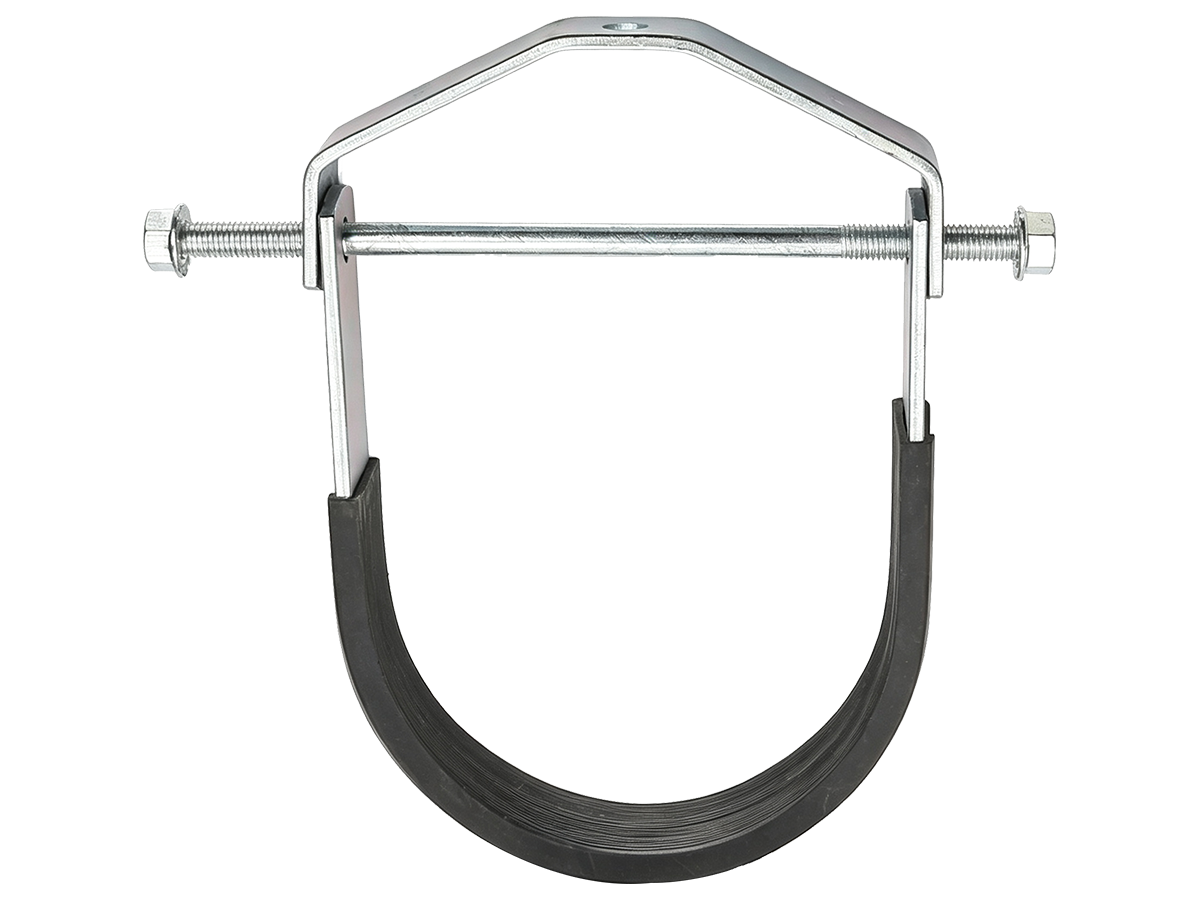
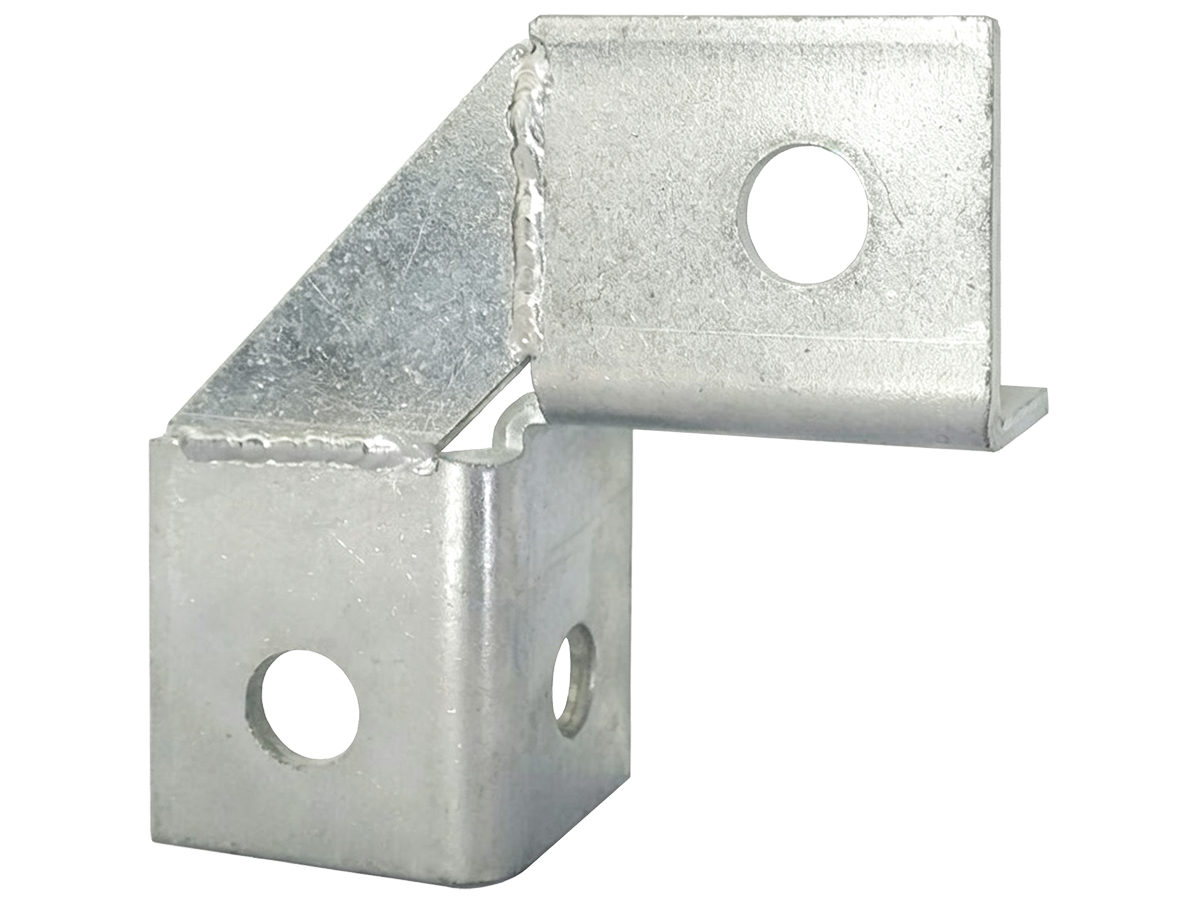
Matching fittings: Seismic hinge connectors, pipe clamps, lateral & longitudinal brace connectors, cable tray clamps
Selection Tips
Small fire pipelines & cable trays: M10 spring nuts
Large air ducts & heavy-duty seismic supports for pipelines above DN200: M12 spring nuts
Assembly combination: Full-threaded suspender rod + flat washer + upper channel clamp plate + C-channel steel + lower channel clamp plate + flat washer + self-locking nut
Installation requirement: One self-locking nut shall be fitted on both top and bottom of each suspender rod to clamp the channel clamp plates; sole use of standard hex nuts is prohibited.
Specified tightening torque (code requirement)
M10 self-locking nut: 35 N·m
M12 self-locking nut: 50 N·m
Electro-galvanized: Cost-effective, for dry indoor shopping malls and office buildings
Hot-dip galvanized: High anti-corrosion performance, preferred for mechanical & electrical seismic systems; suitable for basements, underground pipe galleries, humid parking lots and outdoor areas
Dacromet coating: Superior rust resistance for chemical plants and humid acid-alkali workshops
Full-threaded suspender rod + flat washer + upper channel clamp plate + C-channel steel + lower channel clamp plate + flat washer + self-locking nut
Channel spring nut + bolt + seismic hinge / diagonal brace connector
Standard hex nuts alone are forbidden at all force-bearing seismic joints; self-locking anti-loosening nuts must be adopted.
Channel spring nuts must be used for slidable diagonal brace connections to facilitate on-site dimension adjustment.
Complete galvanized coating without burrs, smooth threads and no thread stripping are required.
All fittings shall adopt hot-dip galvanized finish for buildings with seismic fortification intensity of Grade 6 and above.

Hi! Welcome back.
How are you doing?