





Between 2021 and 2022, the Ministry of Housing and Urban-Rural Development (MOHURD) and other departments issued a series of documents reforming the "eight major categories" of enterprise qualifications, explicitly outlining requirements regarding the number of registered professionals and personnel with professional titles:
1. On March 16, 2022, MOHURD issued the *Decision of the Ministry of Housing and Urban-Rural Development on Amending the "Provisions on the Administration of Qualifications of Real Estate Development Enterprises."*
2. On March 16, 2022, the General Office of the Ministry of Natural Resources issued the *Notice on Further Advancing the "Streamlining Administration, Delegating Power, Improving Regulation, and Upgrading Services" (Fang-Guan-Fu) Reform for the Qualification Accreditation of Urban and Rural Planning Units.*
3. On February 25, 2022, MOHURD issued a notice soliciting public comments on four qualification standards, including the *Qualification Standards for Construction Enterprises (Draft for Comment).*
4. On November 5, 2021, the Ministry of Natural Resources issued a notice soliciting public comments on the *Administrative Measures for Qualifications of Geological Disaster Prevention and Control Units (Draft for Comment).*
5. On November 2, 2021, MOHURD issued a letter soliciting comments on the *Administrative Measures for the Engineering Cost Consulting Industry (Draft for Comment).*
6. On August 17, 2021, the *Provisions on the Administration of Social Fire Technology Services* were adopted at the 27th ministerial executive meeting of the Ministry of Emergency Management and subsequently promulgated.
7. On June 7, 2021, the General Office of the Ministry of Natural Resources issued the *Administrative Measures for Surveying and Mapping Qualifications* and the *Classification and Grading Standards for Surveying and Mapping Qualifications.*
I. Qualifications for Real Estate Development Enterprises
On March 16, 2022, MOHURD issued the *Decision of the Ministry of Housing and Urban-Rural Development on Amending the "Provisions on the Administration of Qualifications of Real Estate Development Enterprises,"* which took effect on the date of promulgation.

1. The qualification grading system for real estate development enterprises has been adjusted from the original four levels (I, II, III, and IV) to just two levels (I and II).
2. Neither Class I nor Class II qualifications require full-time accounting personnel to hold specific qualification certificates.
Personnel requirements for Class I qualification:
At least 40 professional management personnel holding professional titles in architecture, structural engineering, finance, real estate, or related economic fields; among them, at least 20 must hold intermediate or higher-level professional titles; and at least 4 full-time accounting personnel.
Personnel requirements for Class II qualification (which aligns with the former Class IV requirements):
At least 5 professional management personnel holding professional titles in architecture, structural engineering, finance, real estate, or related economic fields; among them, at least 2 must be full-time accounting personnel.
On March 18, the Department of Housing and Urban-Rural Development of Heilongjiang Province issued an announcement:
Class II, III, IV, and "provisional" qualification certificates for real estate development enterprises that are currently within their validity period remain valid; there is no need to renew or reissue the certificates.
Due to the recent impact of the epidemic, and to ensure normal business operations, the validity period of qualification certificates for real estate development enterprises subject to these regulations has been extended to March 31, 2022. (This represents an extension of half a month beyond the timeframe stipulated by the Ministry of Housing and Urban-Rural Development, which is beneficial for enterprises.)
Enterprises that have already obtained a Class II real estate development qualification certificate marked with the note "(valid until the implementation date of the new qualification management regulations)" must re-apply for a Class II qualification certificate.
Original text attached:

In accordance with the *Decision of the Ministry of Housing and Urban-Rural Development on Amending the "Provisions on the Administration of Qualifications of Real Estate Development Enterprises"* (MOHURD Order No. 54), matters concerning applications for the verification of real estate development enterprise qualifications are hereby announced as follows:
I. Existing qualification certificates for real estate development enterprises at Class II, Class III, Class IV, and Provisional levels remain valid within their stated validity periods; there is no need to reissue the certificates.
II. Document Jian Si Ju Han Fang [2021] No. 65 issued by the Ministry of Housing and Urban-Rural Development stipulates: "From July 1, 2021, until the date the new *Provisions on the Administration of Qualifications of Real Estate Development Enterprises* come into effect, if the validity period of a Class III, Class IV, or Provisional qualification certificate expires, the validity period shall be uniformly extended to the date the new provisions are implemented; there is no need to reissue the certificates." Due to the impact of the recent epidemic and to ensure normal production and business operations for enterprises, the validity period for qualification certificates subject to this rule is extended to March 31, 2022.
III. Enterprises that have obtained a Class II real estate development qualification certificate marked with "(valid until the date the new qualification administration provisions are implemented)" must re-apply for a Class II qualification certificate in accordance with the amended *Provisions on the Administration of Qualifications of Real Estate Development Enterprises*.
IV. Our Department is currently formulating detailed implementation rules for the administration of real estate development enterprise qualifications in this province. Pending the issuance of these detailed rules, real estate development enterprises may apply for qualification level verification based on the new standards via the Government Service Management Information System on the Provincial Department of Housing and Urban-Rural Development's official website (http://zfcxjst.hlj.gov.cn/).
Attachment: Decision of the Ministry of Housing and Urban-Rural Development on Amending the "Provisions on the Administration of Qualifications of Real Estate Development Enterprises"
Heilongjiang Provincial Department of Housing and Urban-Rural Development
March 18, 2022
II. Qualifications of Urban and Rural Planning Preparation Units
The General Office of the Ministry of Natural Resources recently issued a notice on further advancing the "streamline administration, delegate power, improve regulation, and upgrade services" (Fang-Guan-Fu) reform regarding the qualification accreditation of urban and rural planning entities. The notice specifies the following:
The approval process for the "Class C qualification accreditation for urban and rural planning entities"—a business licensing matter—is abolished.
Class C qualifications approved or renewed prior to July 1, 2021, remain valid until their expiration dates; however, no further renewals, modifications, or re-verifications of Class C qualifications will be conducted.
A "notification and commitment" system will be implemented for the "Class B qualification accreditation for urban and rural planning entities."
Applications for Class B qualification accreditation must be submitted via the National Territorial Spatial Planning Industry Management Information System in accordance with current qualification standards.
For planning entities granted the qualification, provincial-level natural resource authorities will organize and complete comprehensive on-site inspections within six months of approval. Entities found to be in violation of their commitments will be ordered to rectify the issues within a specified timeframe; failure to rectify within the deadline or failure to fulfill commitments after rectification will result in the revocation of the qualification in accordance with the law.
III. Construction Enterprise Qualifications
On February 25, 2022, the Ministry of Housing and Urban-Rural Development (MOHURD) issued a notice seeking public comments on four qualification standards, including the *Qualification Standards for Construction Enterprises (Draft for Comment)*. The key changes are as follows:
**Constructor (Registered Constructor)**
While there had been online speculation that the required number of constructors would decrease significantly, the actual changes appear relatively minor. A notable point is the requirement for the technical director: previously, holding a professional title sufficed, but now the individual must be a Grade I or Grade II Registered Constructor and possess a track record of engineering project performance.
Demand for constructors with a proven track record will increase, and the value of such qualifications will rise significantly.
The number of Grade I Constructors required for "Comprehensive Qualifications" remains unchanged (requiring 50 or more Grade I Constructors).
**General Contracting:** The requirement for Grade III qualifications—previously 5 constructors (with specific exceptions: 8 for Highway and Water Conservancy/Hydropower; 7 for Metallurgy; 3 for Railway)—has been revised. Now, Grade A qualifications require 10 Grade I Constructors, while Grade B qualifications require 5 constructors (maintaining the specific exceptions: 8 for Highway and Water Conservancy/Hydropower; 7 for Metallurgy; 3 for Railway).
**Professional Contracting:** The requirement for Grade III qualifications—previously 3 constructors (with specific exceptions: 2 for Ancient Architecture; 5 for Highway; 4 for Railway Electrification/Signaling and Port/Waterway; 6 for Nuclear Engineering)—has been revised. Now, Grade A qualifications require 5 Grade I Constructors, while Grade B qualifications require 3 constructors.
In accordance with Document Jian Shi [2016] No. 226: With the exception of low-level qualifications in various categories, the assessment of quotas regarding Registered Constructors, personnel with intermediate or higher professional titles, on-site management personnel holding position certificates, and skilled workers has been abolished.
**Other Changes**
Requirements regarding personnel with professional titles and skilled workers have been eliminated.
For both General Contracting and Professional Contracting (Grade A), a new requirement has been added regarding the amount of construction-related Value-Added Tax (VAT) paid over the preceding three years.
**Engineering Project Performance**
1. Project performance requirements have been raised for certain categories. For Grade A General Contracting of Building Construction Projects, the requirement has shifted from "having undertaken general construction contracting or main structure contracting for two of the following four categories of projects within the past five years" to "having undertaken general construction contracting for more than three of the following four categories of projects within the past five years";
For Grade A General Contracting of Railway Projects, the requirement has shifted from "having undertaken three of the following five categories of projects within the past ten years" to "having undertaken four of the six categories of projects within the past ten years."
2. Project performance requirements for qualification renewal:
Age and social security requirements
Age and social security requirements for key personnel, aimed at preventing "certificate lending" (holding a qualification without actually working for the company):
Related reading: The value of Constructor qualifications has surged! What changes did the Ministry of Housing and Urban-Rural Development make to construction enterprise qualification standards in 2022? (Includes a comparison between old and new standards)
IV. Qualifications of Geological Hazard Prevention and Control Units
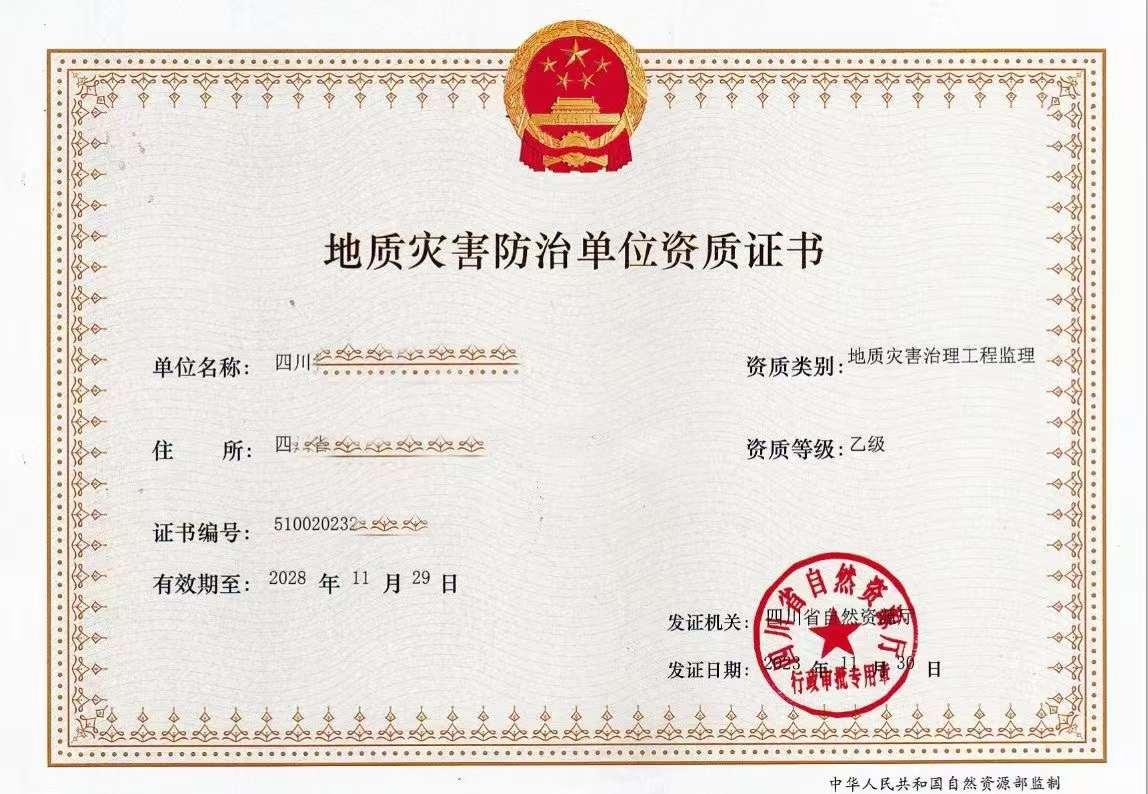
On November 5, 2021, the Ministry of Natural Resources issued a public notice seeking comments on the *Administrative Measures for the Qualification of Geological Hazard Prevention and Control Units (Draft for Comment)*. The draft eliminates the Grade C qualification and lowers the personnel requirements for Grade B qualifications, aligning them with the lower staffing requirements previously applicable to Grade C qualifications.
1. Reduction of Qualification Grades
In accordance with the requirements of Document Guo Fa [2021] No. 7, the qualification grades have been reduced from three levels (Grade A, B, and C) to two levels (Grade A and B).
Qualifications for geological hazard prevention and control units are categorized into two grades: Grade A and Grade B.
2. Consolidation of Qualification Categories from Five to Three
The categories of qualifications for geological hazard prevention and control units now include: qualification for geological hazard assessment, investigation, and design; qualification for geological hazard control engineering construction; and qualification for geological hazard control engineering supervision.
3. Adjustment of Qualification Standards
The personnel requirements for the revised Grade A qualification remain largely consistent with the previous three sets of administrative measures, ensuring that standards are not lowered;
The personnel requirements for the revised Grade B qualification align with the lower staffing requirements previously applicable to Grade C qualifications, thereby enabling small and micro-enterprises to enter the market.
Personnel requirements for Grade B qualifications:
For units applying for qualifications in geological hazard assessment, investigation, and design, or in geological hazard control engineering supervision: the total number of professional technical personnel must be at least 10, including at least 3 personnel with senior technical titles;
For units applying for the qualification in geological hazard control engineering construction: the total number of professional technical personnel must be at least 20, including at least 5 personnel with senior technical titles.
4. Reduction of Qualification Certificate Modification Requirements
The distinction between the original and duplicate copies of the qualification certificate has been eliminated; there is now a single, unified "Qualification Certificate for Geological Hazard Prevention and Control Units." Information previously listed on the certificate—such as the legal representative, technical director, and unit address—has been removed; consequently, updates to this information no longer require modification of the qualification certificate, thereby reducing the administrative burden on the units.
V. Qualifications of Engineering Cost Consulting Enterprises
On November 2, 2021, the Ministry of Housing and Urban-Rural Development (MOHURD) issued a letter soliciting public opinion on the *Administrative Measures for the Engineering Cost Consulting Industry (Draft for Comment)*. The *Administrative Measures for Engineering Cost Consulting Enterprises* and the *Administrative Measures for Registered Cost Engineers* were merged and revised to form this *Draft for Comment*.
**Key Revisions**
Specific revisions were made in the following areas:
**First, the deletion of provisions regarding the qualifications of engineering cost consulting enterprises.** To implement the requirements of State Council Document No. 7, this revision removes the clauses concerning enterprise qualifications found in MOHURD Decree No. 149 (specifically Articles 8 through 18 of Decree No. 149).
**Second, the addition of provisions on information management.** Information management covers basic information, professional practice details (including engineering cost deliverables), and records of creditworthiness or misconduct regarding engineering cost consulting enterprises and registered cost engineers. Enterprises and registered cost engineers are to voluntarily submit relevant information and accept public oversight. Provincial-level housing and urban-rural development authorities are responsible for formulating credit information management systems for the industry within their jurisdictions and implementing dynamic credit information management, thereby fostering a market environment based on honesty and integrity (Articles 27 through 32 of the *Draft for Comment*).
**Third, the clarification of localized management for registered cost engineers.** In accordance with the *Administrative Licensing Law*, this revision applies the principle of localized management to further clarify that registered cost engineers must be registered with enterprises possessing independent legal person status. The registration management authority is the provincial-level housing and urban-rural development department where the enterprise is registered (Articles 14 and 15 of the *Draft for Comment*).
**Fourth, the refinement of liability provisions.** To strengthen industry management and further clarify and enforce the responsibilities of engineering cost consulting enterprises and registered cost engineers, this revision introduces penalties for violations such as the submission of false information by enterprises or engineers, and the acceptance of engineering cost consulting assignments by registered cost engineers in violation of regulations (Articles 44, 45, and 51 of the *Draft for Comment*).
**Fifth, the streamlining of specific regulations, such as the registration process for cost engineers.** This revision removes procedural clauses regarding the initial registration, renewal of registration, and modification of registration for cost engineers; these details are intended to be clarified in subsequent supporting documents (Articles 8 through 12 of MOHURD Decree No. 150).
VI. Social Fire Safety Technical Services
The *Provisions on the Administration of Social Fire Safety Technical Services* were adopted at the 27th executive meeting of the Ministry of Emergency Management on August 17, 2021. They are hereby promulgated and shall come into force on November 9, 2021.
1. The requirement for qualification licensing for agencies providing fire safety facility maintenance, servicing, and testing, as well as fire safety assessment, has been abolished; enterprises may commence business operations immediately after obtaining a business license.
2. The classification/grading system for fire safety technical service agencies has been abolished, and entry requirements have been appropriately relaxed; specifically, the requirements regarding the floor area of the agency's premises and the number of registered fire engineers have been lowered. Compared to the previous qualification criteria, the changes to the requirements for these agencies are primarily as follows:
First, the required floor area for premises has been reduced. Second, the required number of personnel has been lowered: for agencies conducting fire safety facility maintenance, servicing, and testing, the minimum number of registered fire engineers has been reduced from 10 to 2 (with at least one holding a Level 1 Registered Fire Engineer qualification); for fire safety assessment agencies, the minimum number has been reduced from 12 to 2 (with at least one holding a Level 1 Registered Fire Engineer qualification); and for agencies providing both types of services, the minimum number has been reduced to 2 (with at least one holding a Level 1 Registered Fire Engineer qualification). Third, specific requirements regarding the number of fire facility operators in maintenance, servicing, and testing agencies have been clarified: at least six personnel must hold a national vocational qualification certificate for fire facility operators, with at least two of them possessing an intermediate skill level or higher.
At the same time, requirements regarding the specific number of personnel with skill levels above the advanced level have been abolished.
VII. Surveying and Mapping Qualifications
The General Office of the Ministry of Natural Resources issued the *Administrative Measures for Surveying and Mapping Qualifications* and the *Standards for Classification and Grading of Surveying and Mapping Qualifications*, which took effect on July 1, 2021.
The requirement for Registered Surveyors regarding surveying and mapping qualifications has been abolished; instead, the qualification is now linked to professional titles.
Registered Surveyors who do not hold a senior professional title in surveying and mapping may be counted as intermediate-level surveying and mapping technical personnel.
The personnel requirements for these qualifications are as follows:
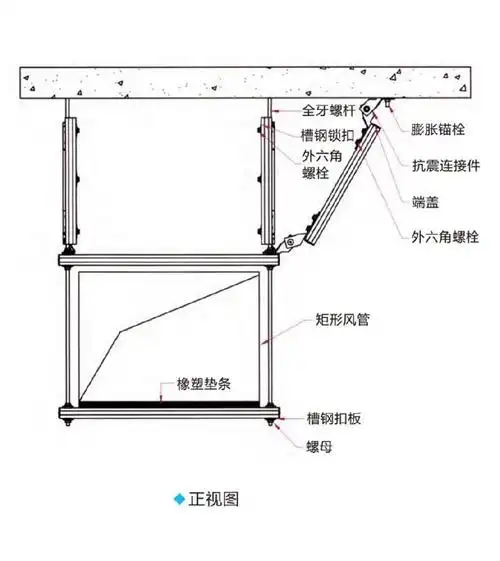
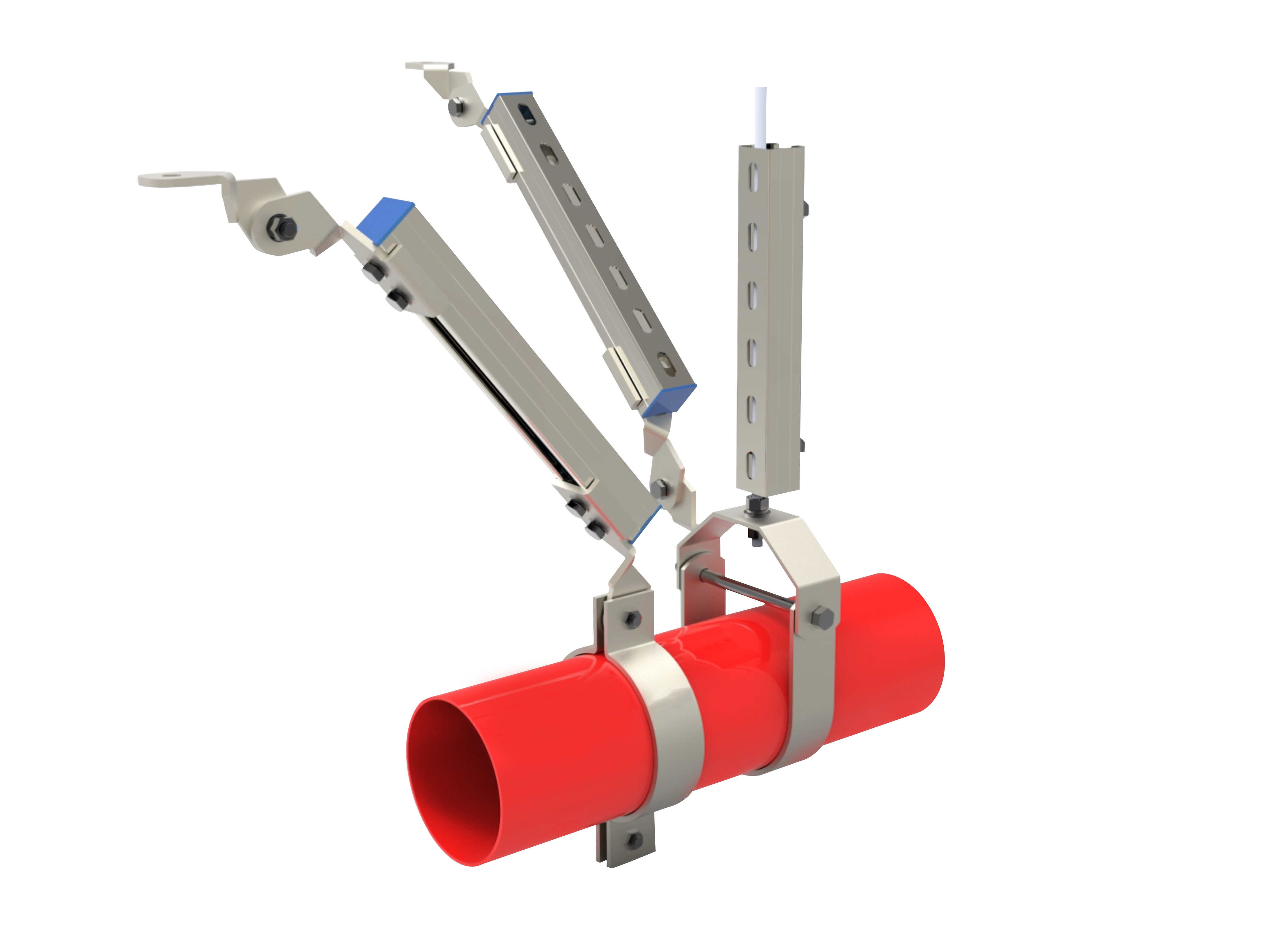
Jiangsu Senji Construction Engineering Technology Co., Ltd. specializes in the design, manufacture, and sales of seismic supports, fire-fighting pipeline supports, utility tunnel supports, prefabricated support and hanger systems, as well as seismic supports for air ducts and cable trays. These products are primarily used in large-scale projects such as high-rise buildings, residential complexes, urban underground utility tunnels, subway projects, shopping malls, railway stations, underground parking facilities, and bus terminals.